DeskSpace

Crumbs on a seat and a mark on an arm pad can appear on the same chair without calling for the same treatment. The upholstery, suspension material, pads and frame may have separate care instructions. A product that is suitable for one surface does not automatically belong on the others.
Begin with the chair you own and the job in front of you. Routine dust removal, a fresh spill and a stubborn stain are different decisions. Matching the method to the actual material gives you a useful way to care for an existing chair without turning every mark into a reason to replace it.
Find the material record before choosing a cleaner
Use the model, order information and manufacturer documentation to identify the supplied surfaces. A familiar chair name may still have different upholstery or finish options. A replaced or custom-covered seat needs the relevant material information, not simply the care advice for the chair's original appearance.
The manufacturer's care library can be a starting point. Herman Miller's material resources link to chair-specific documents, while Steelcase's cleaning guidance ties textile care to the material's cleaning code and approved solution. Steelcase directs custom materials to their own manufacturer and limits its advice to its own products.
Do not assume every chair carries a convenient cleaning-code label. You may need the order record or help identifying the upholstery. If the material remains unknown, obtain that answer before trying a treatment intended for something that merely looks similar.
Treat the chair as several care surfaces
Read the applicable instructions with the actual chair beside you. Identify which section belongs to the seat and back, which covers the arm pads, and which concerns the frame or base. Keep the process boundaries visible rather than reading a permitted product name and applying it everywhere.
The current Aeron care document, for example, labels its suspension material 8Z Pellicle and separates its care from frame, base and leather-arm-pad instructions. That is a specific material record, not a method for every mesh chair or every historical Aeron.
The Embody care document, dated September 2021, separately addresses frame and arms, fabric care and stain types. Its presence in the current care library does not establish that every later or special-edition upholstery uses those same processes.
These examples show why the surface match matters. They do not identify the material in a contextual photograph or qualify the treatment of another brand.
Start with the routine job the instructions describe
For the material it identifies, the Aeron document calls for an upholstery vacuum attachment and prohibits brushing or rotary brushes. The cited Embody document also specifies an upholstery attachment for routine fabric care and prohibits rotary brushing. Those are named instructions for the materials covered by the documents, not a universal vacuuming rule for every seat.
Choose the tools permitted by your matching care guidance. A routine process should not quietly become a stronger stain treatment just because a mark remains. The instructions may give that mark a separate procedure or direct you to further help.
Inspect the condition as you work through the care decision. A torn covering, broken support or failing control raises a repair question. Cleaning is not evidence that the underlying part is serviceable, and a stain-removal guide is not a procedure for lubricating or repairing the mechanism.
Give a stain its own decision
Before applying a product, identify what the material's instructions allow for that kind of soiling. The Embody document distinguishes water-based and oil-based stain processes and refers resistant or extensive soiling to professional cleaners. That distinction is lost if every mark receives the same household cleaner.
The cited Herman Miller instructions also warn against excessive wetting or saturation and require thorough drying before reuse. The Aeron guidance cautions against vigorous rubbing. Follow those requirements only within the matching document's material scope; do not build a universal recipe from isolated directions on different pages.
Steelcase likewise requires specific fabric approval for disinfectants. Its cautions about surface changes and wear are a reason to confirm approval, not an invitation to choose a stronger product. This article does not establish disinfecting effectiveness or recommend a chemical.
A spot test does not turn an unapproved treatment into an approved one. If the instructions leave the material, product or stain response unresolved, ask the manufacturer or an appropriate professional before expanding the treatment.
Crumbs and an arm-pad mark need separate answers
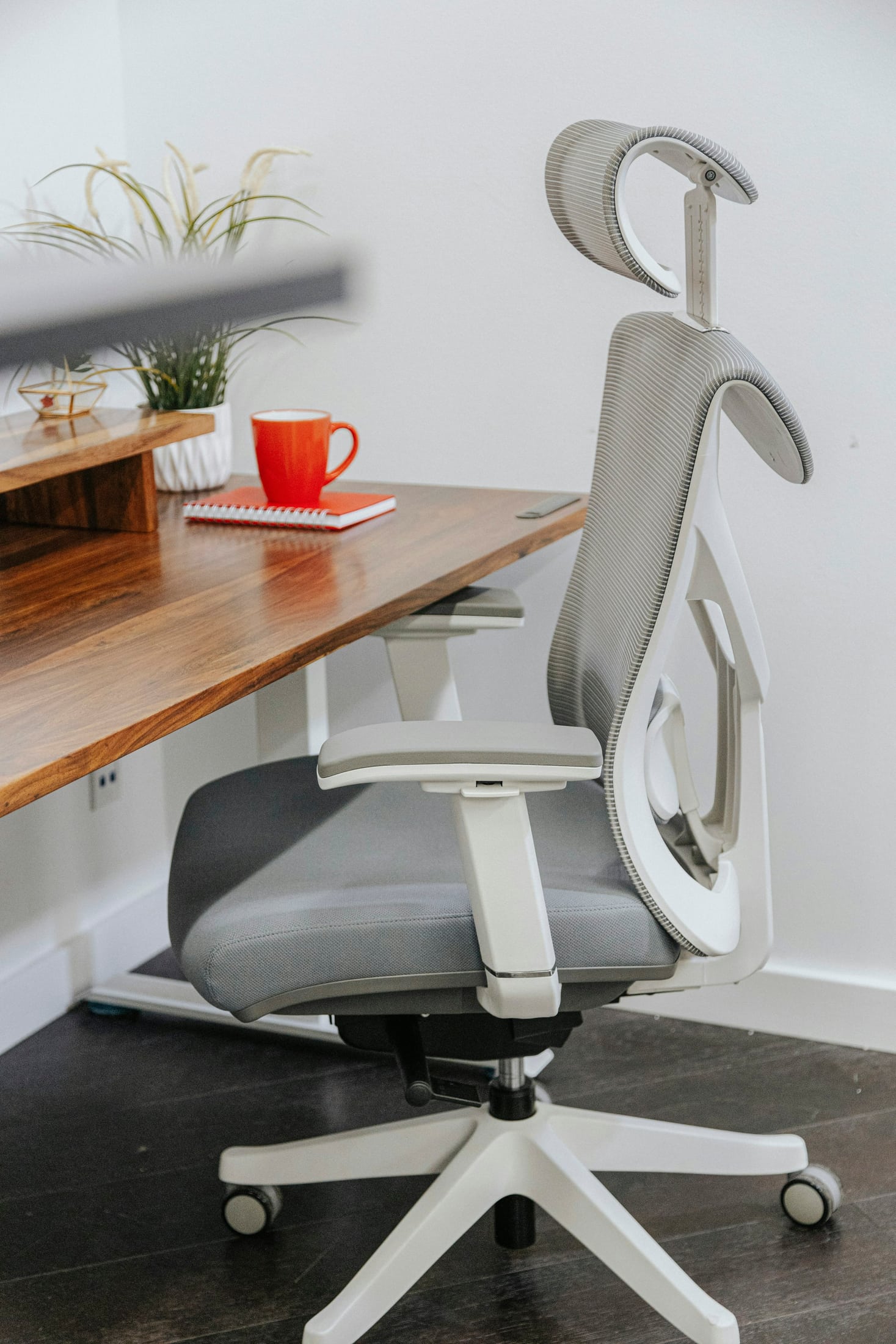
Imagine someone preparing a fabric chair for another working week. There are crumbs on the seat and a mark on an arm pad. The matching upholstery instructions permit a particular vacuum approach, but the arm pad's finish has not yet been identified.
The reader handles the routine seat care according to that document and checks the separate arm-pad section. When it does not establish the unknown finish, the next step is to obtain the correct material guidance. Applying the seat treatment everywhere would skip the very distinction the documents require.
That is an imagined care decision, not a cleaning result we achieved. Its conclusion is practical: you can address an identified routine task while keeping an unidentified stain or finish unresolved. There is no need to pretend one product can complete every part of the chair.
Keep the useful instructions with the chair
Once the correct documents are found, keep their model and material references with the chair's records. Note which surfaces they cover and where to ask about a persistent stain or an unclear finish. Follow any drying and return-to-use instructions in the applicable process rather than choosing a universal cleaning schedule.
The mesh-versus-cushion guide can help distinguish different seat and back constructions, but it is not a substitute for their care instructions. If the remaining question concerns wheels and the room's flooring, use the caster-and-flooring guide for that separate compatibility decision.
Keep a chair that continues to meet your needs, with care based on the surfaces actually supplied. The useful next action is to find the missing material instruction, not to make an unsupported treatment more aggressive.
Sources and review scope
The linked Herman Miller care PDFs and material index and Steelcase cleaning page were read November 2, 2026. The PDFs were read as text; no visual interpretation of their diagrams is claimed. The Embody document retains its September 2021 date, and the Aeron example concerns its explicitly named 8Z Pellicle material.
DeskSpaceLab has not tested cleaning products, stain removal, material durability or hygiene outcomes. The scenario is editorial analysis. No cleaning method or brand identity is inferred from a contextual chair photograph.
About this guide: An editorial planning profile, not a medical professional. Turns workspace questions into measurements, layout decisions and practical buying sequences. Editorial profile
Keep planning your workspace.
Use the sources and related guides to choose your next step.
Explore buying guides →