DeskSpace
Moving a familiar office chair into another room can create a new decision even when the chair itself has not changed. The floor may have different care requirements, the wheels may be worn, or the movement you want at the desk may feel different on the new surface.
Check the chair and floor as separate parts of the decision. A wheel described as suitable for hard floors is not automatically approved for your finish, and a replacement that fits one chair is not necessarily a suitable part for another. Start with identification and condition before choosing a new wheel style.
Find the floor's instructions first
Identify the flooring product and its care guidance where possible. Appearance alone may not tell you the material or finish. Existing installation records, the flooring supplier or the manufacturer can provide a more useful starting point than a photograph or a broad “wood floor” description.
Read what that guidance says about rolling furniture, protective mats and permitted materials. These requirements belong to the actual floor, including any qualifications for its surface. A general wheel category cannot replace them.
For example, Shaw's residential engineered-hardwood document warns about damage from poorly maintained or damaged casters with sharp edges. Its precautions discuss soft rubber wheels and protective mats or caster cups under furniture. This is evidence for consulting the floor's own guidance, not permission to use any rubber wheel or mat on every finish.
The document is specific to that flooring system. It does not settle the requirements of another wood product, vinyl floor or carpet, and this guide does not determine warranty coverage.
Use wheel categories as a starting question
CCOHS's office-chair guidance gives hard casters on carpet and softer casters on hard floors as general examples. It also notes that some tasks call for stationary support or braking.
Use those categories to ask a better question about your arrangement. What movement does the work require, and which manufacturer-approved options suit both the chair and surface? The easiest possible rolling is not automatically the goal for every task.
Do not treat the appearance of a wheel, a material label or a claimed universal fitting as a completed compatibility check. The product still needs to be appropriate for the exact chair and floor. This guide does not qualify a particular replacement set or recommend a wheel style across brands.
Identify the chair before ordering parts
Find the chair's product label and the service information its manufacturer uses. Keep the model and production details with a description of the existing wheel and the problem you want to resolve. Use the manufacturer's instructions for reaching or inspecting those details rather than improvising a disassembly.
Herman Miller's customer-service FAQ is one example of this process. It asks for product identification and manufacturing or order information, often from a label beneath the seat, alongside a description and photographs. Some caster replacements are offered through its store, while other parts use a dealer route.
That example explains why identification comes first; it does not establish the parts process for every chair brand or promise service eligibility. Obtain the approved replacement or service route for your actual chair. A seller saying that a set fits many chairs is not the same evidence.
Check whether the existing wheels need attention
Before changing an otherwise suitable setup, inspect the wheels in the way the chair manufacturer permits. Look for collected debris, obvious wear or damaged edges, and note whether each wheel moves as expected. Follow the specified cleaning and maintenance guidance; an unfamiliar wheel design is not a reason to apply a treatment intended for another material.
The flooring example above makes condition relevant as well as wheel selection. A product category alone cannot establish that worn or damaged casters are suitable to continue using.
If inspection suggests damage, stop treating the arrangement as serviceable and use the chair's repair or replacement guidance. This article supplies no universal wheel-removal, installation or lubrication procedure. An approved part change may still require the manufacturer's service process.
Decide what a mat must do
A chair mat and replacement wheels answer related but different questions. A mat must be suitable for the floor and the intended rolling area. It does not identify the chair's approved parts, while a new set of wheels does not automatically replace a mat required by the floor's instructions.
Check how the chair actually moves during work, including approaching the desk and leaving it. A mat that covers only the place where the chair is parked may not cover those movements. Follow its own placement and care requirements alongside the floor's guidance.
Do not substitute a standing mat simply because it also sits beneath a desk. Its intended use does not establish suitability for rolling-chair movement. Likewise, a mat's material or protective label is not a guarantee against every type of floor damage.
A room change needs both compatibility checks
Imagine someone moving a familiar chair from carpet into a room with engineered wood flooring. The first impulse is to buy wheels advertised for hard floors. Instead, the reader finds the chair's service label and the floor's care instructions.
The chair information identifies the approved replacement path. The floor information adds a requirement for a suitable protective mat. In that imagined case, replacing wheels alone would leave part of the floor guidance unanswered. The useful choice is the complete supported arrangement, not whichever wheel looks most reassuring.
After any approved change, check rolling, turning, sitting down and leaving the desk in ordinary use. Evaluate whether the arrangement provides the intended movement; do not infer scratch-free performance from a brief trial. This is a hypothetical decision sequence, not a tested chair-and-floor combination.
Keep the change focused on the actual problem
Keep the existing casters when they are suitable, maintained and working as intended. Investigate another approved option when a different floor, a service issue or the required movement justifies it.
If the chair reaches the desk but its arms obstruct the approach, the armrest guide addresses that separate problem. After the chair is positioned, use the workstation-position guide for the relationship between seat, keyboard and screen. A wheel change does not establish the rest of the setup.
Sources and review scope
The linked CCOHS chair guidance, Herman Miller FAQ and Shaw engineered-hardwood document were read November 2, 2026. They support general planning questions and specific examples, not universal replacement compatibility or flooring-warranty advice.
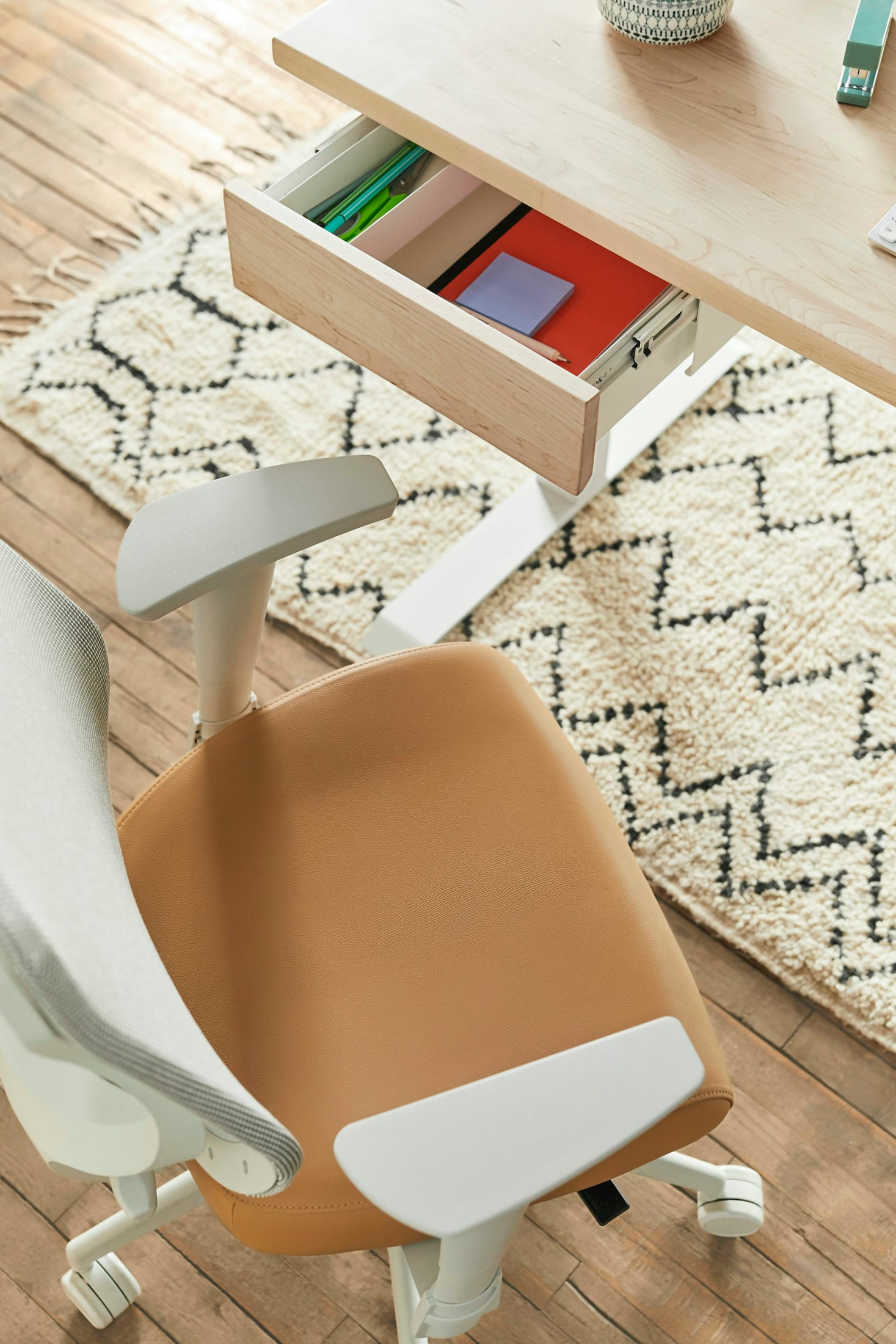
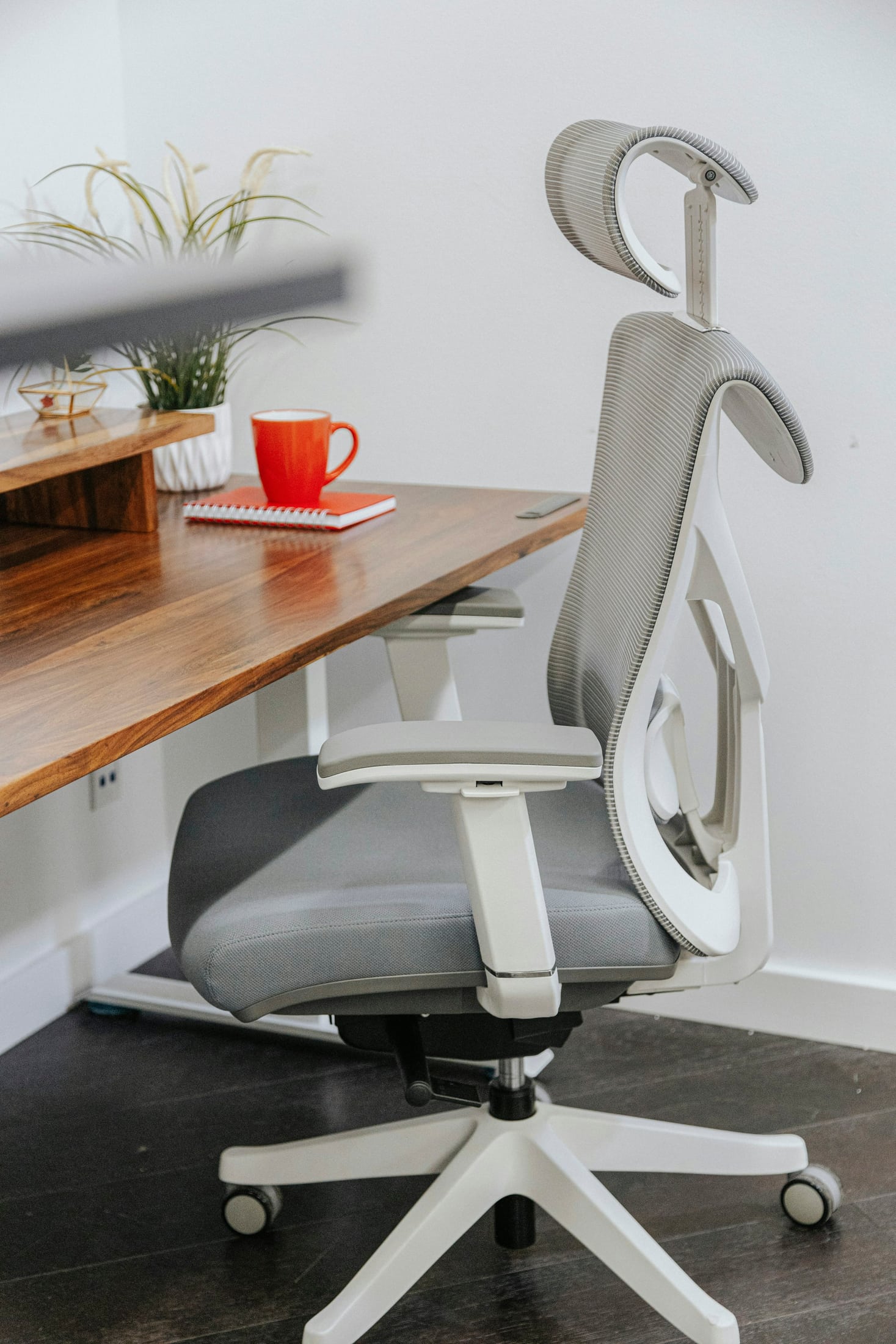
DeskSpaceLab has not tested wheels, rolling behavior or floor protection. The scenario is illustrative, and contextual photographs do not identify a floor finish, approved caster or verified installation.
About this guide: An editorial planning profile, not a medical professional. Turns workspace questions into measurements, layout decisions and practical buying sequences. Editorial profile
Keep planning your workspace.
Use the sources and related guides to choose your next step.
Explore buying guides →