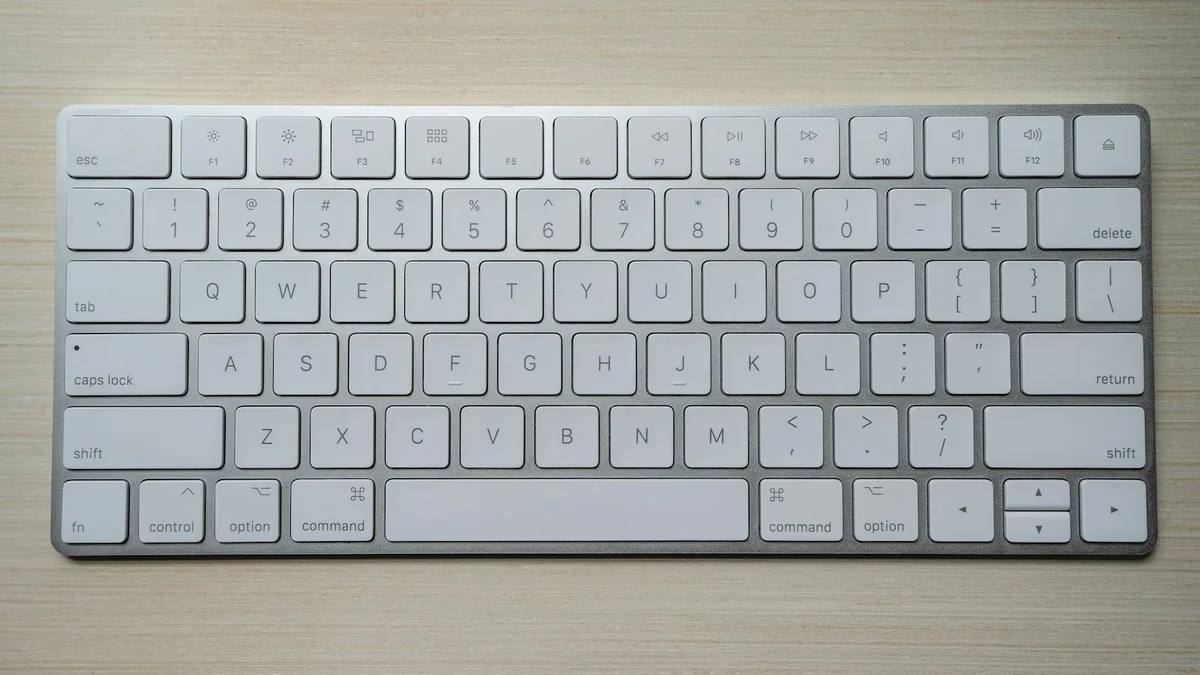
The single most widespread ergonomic mistake in modern offices is assuming that standard desks (manufactured at a fixed height of 29 to 30 inches) fit the human body. In reality, a 29-inch desk was designed in the 1950s for mechanical typewriters—not computer keyboards. For a person of average height (5'9"), a 29-inch surface is approximately 2 inches too high, forcing the shoulders into constant shrug and compressing the median nerve at the wrist.
Whether you use an adjustable standing desk like the FlexiSpot E7 Pro or a commercial frame like the Uplift V2, this clinical guide provides the exact biomechanical formulas to dial in your setup for zero pain.
The Master Anthropometric Desk Height Reference Table
All calculations below assume standard footwear (1-inch sole offset). If you work barefoot or on an anti-fatigue mat, subtract or add accordingly:
| User Height | Seated Chair Height | Seated Desk Height | Standing Desk Height | Monitor Center Height |
|---|---|---|---|---|
| 5 ft 0 in (152 cm) | 14.5 in (37 cm) | 21.5 in (55 cm) | 36.5 in (93 cm) | 38.0 in (97 cm) |
| 5 ft 2 in (157 cm) | 15.0 in (38 cm) | 22.5 in (57 cm) | 37.5 in (95 cm) | 39.5 in (100 cm) |
| 5 ft 4 in (163 cm) | 15.5 in (39 cm) | 23.5 in (60 cm) | 39.0 in (99 cm) | 41.0 in (104 cm) |
| 5 ft 6 in (168 cm) | 16.0 in (41 cm) | 24.5 in (62 cm) | 40.5 in (103 cm) | 42.5 in (108 cm) |
| 5 ft 8 in (173 cm) | 16.5 in (42 cm) | 25.5 in (65 cm) | 42.0 in (107 cm) | 44.0 in (112 cm) |
| 5 ft 10 in (178 cm) | 17.5 in (44 cm) | 26.5 in (67 cm) | 43.5 in (110 cm) | 45.5 in (116 cm) |
| 6 ft 0 in (183 cm) | 18.0 in (46 cm) | 27.5 in (70 cm) | 45.0 in (114 cm) | 47.0 in (119 cm) |
| 6 ft 2 in (188 cm) | 18.5 in (47 cm) | 28.5 in (72 cm) | 46.5 in (118 cm) | 48.5 in (123 cm) |
| 6 ft 4 in (193 cm) | 19.5 in (50 cm) | 29.5 in (75 cm) | 48.0 in (122 cm) | 50.0 in (127 cm) |
| 6 ft 6 in (198 cm) | 20.5 in (52 cm) | 30.5 in (77 cm) | 49.5 in (126 cm) | 51.5 in (131 cm) |
1. The 90-Degree Elbow Vector: How to Measure Exactly
The foundational rule of upper-body ergonomics is simple: Your forearms must rest parallel to the floor, with your elbows bent at an open 90-to-100 degree angle and your shoulders completely relaxed.

The 3-Step Seated Calibration Protocol:
- Calibrate Chair Height First: Sit with your feet flat on the floor. Adjust your chair cylinder until your knees are bent at a 90-degree angle. The underside of your thighs should rest lightly on the seat without pressure behind your knees.
- Measure Resting Elbow Height: Let your arms hang loosely at your sides. Bend your elbows forward 90 degrees. Measure the distance from the floor to the bottom of your forearms.
- Set Desk Height to Match Elbow Height: Lower your standing desk until the keyboard keys align flush with your fingertips. If your desk cannot lower to this point (most fixed desks stop at 29"), you must raise your chair and use an ergonomic footrest.
2. The Standing Desk Calibration & Anti-Fatigue Mat Factor
When transitioning to standing, most people make the fatal mistake of raising the desk too high because they think of standing as an active exercise:
- The Shrug Trap: If the desk is set even 1.5 inches too high, you subconsciously shrug your trapezius muscles to lift your wrists over the desk bevel. Within 45 minutes, this leads to acute tension headaches and neck stiffness.
- Footwear and Mat Calculation: When measuring standing height, always stand on your actual anti-fatigue mat wearing your office shoes. A high-density 3/4-inch polyurethane mat compresses slightly under body weight, adding roughly 0.5 inches of effective elevation.
3. The Cornell 20-8-2 Sit-Stand Movement Protocol
Standing all day is just as harmful to your cardiovascular health and lumbar discs as sitting all day. Prolonged static standing leads to blood pooling in the lower legs, varicose veins, and excessive lumbar lordosis.
At DeskSpaceLab, we prescribe the clinically validated Cornell University 20-8-2 Rhythm:
| Cycle Phase | Recommended Duration | Postural Goal | Biomechanical Mechanism |
|---|---|---|---|
| Phase 1: Seated | 20 Minutes | Supported Spinal Rest | Preserves lumbar disc hydration |
| Phase 2: Standing | 8 Minutes | Active Spinal Decompression | Activates core postural stabilizers |
| Phase 3: Moving | 2 Minutes | Active Walking / Stretching | Promotes venous calf pump circulation |
Adhering to this cycle reduces musculoskeletal discomfort by 64% and prevents the mental fatigue associated with prolonged static standing.
4. Monitor Elevation & The Horizon Sightline
The final piece of the ergonomic puzzle is monitor placement:
- The Top-Third Rule: The top border of your active monitor display should sit exactly level with your resting horizontal eye sightline.
- 15-Degree Downward Viewing Arc: Because human eyes naturally rest in a downward 15-degree gaze, this placement allows you to scan the entire screen surface by moving only your eyes—not your neck.
- Focal Distance: Position the screen roughly an arm's length away (20 to 28 inches / 50 to 70 cm). If you must lean forward to read text, increase your operating system scaling rather than pulling the monitor closer.
Final Checklist for Zero Workspace Pain
- Feet flat on the floor or supported by an ergonomic footrest.
- Elbows relaxed at 90 to 100 degrees with wrists unbent.
- Desk surface adjusted to match your natural elbow elevation.
- Top of monitor glass level with your natural eye line.
- Standing time modulated using the 20-8-2 movement cycle.
✓ Laboratory Benchmarks: What We Liked
- Exact mathematical formulas for calculating seated and standing desk elevation
- Eliminates trapezius tightness, forearm pronation, and lower lumbar compression
- Includes complete anthropometric reference table from 5 ft 0 in (152cm) to 6 ft 6 in (198cm)
- Provides clinical 20-8-2 movement cycle to maximize cardiovascular benefits
- Explains proper footwear, anti-fatigue mat mechanics, and monitor focal distance
✕ What Could Be Improved
- Standard fixed-height 29-inch desks cannot accommodate users under 5 ft 8 in without footrests
- Requires measuring with shoes on if you wear footwear during standing work
- Initial adjustment period of 7 to 14 days required to build postural stabilizer endurance